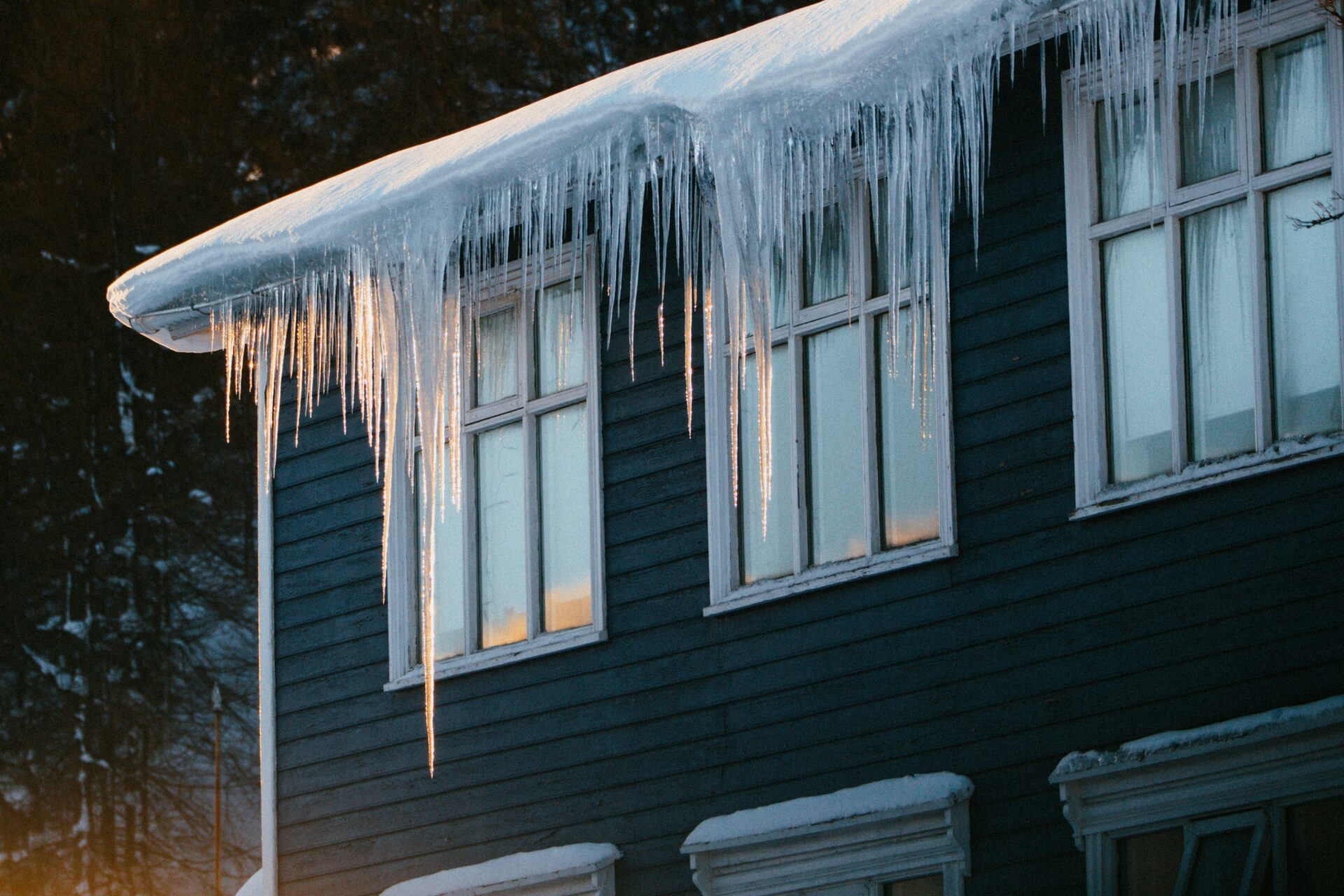
While icicles hanging from the eaves might seem picturesque, they’re often a sign of a serious (but avoidable) problem with your home’s energy performance: ice dams.
What is an ice dam?
An ice dam is a ridge of ice that forms at the edge of your roof, typically after heavy snowfall. It prevents melting snow from properly draining, and when snow melts then refreezes under your roof shingles, it creates an opportunity for water to back up and leak into your home.
How does ice damming impact Wisconsin homes?
In colder climates like Wisconsin, ice dams are a recurring winter concern. Homeowners may first notice them as water stains on ceilings or walls, peeling paint, or moisture in attics. But left unchecked, ice dams can cause:
- Roof leaks
- Mold and mildew growth
- Damaged insulation
- Rotting wood
- Expensive repairs
How do ice dams form?
Ice dams form when warm air from your home escapes into the attic, warming the underside of the roof. This causes snow on the roof to melt. The meltwater flows down to the colder edges of the roof and refreezes, forming a dam. As more snow melts, water pools behind the ice dam. That’s when leaks begin.
Several conditions contribute to ice damming:
- Poor attic insulation
- Inadequate air sealing
- Lack of proper attic ventilation
- Uneven roof temperatures
Older homes are at an increased risk of ice dams due to their inadequate insulation and lack of proper ventilation, leading to higher attic temperatures.
How does heat enter your attic?
Heat enters the attic through a process called “thermal bridging.” Warm air rises from your living space and leaks into the attic through gaps in insulation, poorly sealed ceiling penetrations (like light fixtures, interior wall top plates and plumbing vents), and attic access points. Once in the attic, that heat warms the roof decking, triggering snow melt and the ice dam cycle begins.
The presence of recessed lighting, chimney chases, or improperly sealed ductwork can significantly accelerate heat loss into the attic. It’s a building science issue, and one that can be solved with the right approach.
We apply exterior wall perimeter top plate spray foam to strengthen the weakest link of your attic system, the perimeter. Combined with proper ventilation, you can minimize the impact of fluctuating temperatures.
How can you mitigate ice damming?
A snow rake will help you remove snow from your roof, ensuring it will never melt and enter your home. However, this fix isn’t reliable and forces you to manually remove snow from your roof after every storm.
A more effective long-term solution is to eliminate thermal bridging and better seal your attic. At Wisconsin Home Improvement, we focus on addressing the root cause, using building science to create a durable, energy-efficient solution tailored to your home.
We take a five-step approach to mitigating ice damming, ensuring your home’s comfort through:
- Home Energy Audit — We always start with an energy audit to assess insulation levels, identify air leaks, and evaluate ventilation patterns in your attic and home envelope.
- Air Sealing — We close gaps around light fixtures, attic hatches, and top plates to stop warm air from escaping into your attic.
- Insulation Upgrades — We install proper insulation to slow heat transfer and stabilize attic temperatures, even in sub-zero weather.
- Ventilation Improvements — We ensure your attic is properly ventilated to balance temperature and moisture levels throughout the year.
- Moisture Control — We check for signs of condensation or mold to protect your home’s health and durability.
How can you protect your Wisconsin home?
At Wisconsin Home Improvement, we offer free Home Energy Audits to give you peace of mind. Whether you’re struggling with thermal bridging or water leaks, we identify the root cause and solve it so you can comfortably enjoy your home, no matter the season.