
Every home needs high quality insulation, but how do homeowners go about choosing which kind is right for their property? All insulation types provide a thermal barrier for the home. Cellulose and fiberglass insulation both work to regulate temperature by impeding the flow of heat. Cellulose and fiberglass Insulation will not prevent exterior air from passing through the interior spaces, but proper air sealing will help prevent air from passing through, as will the insulation of choice and the resistance of heat transfer. Adequate insulation helps keep Wisconsin homes warmer during the winter and cooler in the summer, while also keeping utility bills low.
However, different types of insulation offer different benefits. Individuals who are wondering what kind of insulation should I get can start by learning the differences between fiberglass insulation and cellulose, the two most common and most effective types of insulation.
An Overview of Fiberglass Insulation
Fiberglass insulation is made from fine glass fibers. When packed into blankets (known as batts), the glass fibers trap air and reduce the transfer of heat from the outside of a home to the inside and vice versa. The R-value indicates the capacity of an insulating material to resist heat flow. The higher the R-value, the greater the insulating power.
Fiberglass insulation can have an R-value from R-11 up to R-30, depending on the density and thickness. Fiberglass insulation is also available in rolls and as loose fill. It is non-combustible and resistant to moisture, mold, and pests, making it a durable and long-lasting option for insulating homes and buildings.
An Overview of Cellulose Insulation
Cellulose insulation is made from recycled paper, cardboard, or recycled denim. In the case of WHI, we currently use CleanFiber, which is made of recycled cardboard. In most cases, the insulation is made up of at least 75% recycled materials. The remainder of the insulation, by weight, consists of chemical treatments that make the insulation a deterrent to fire and pests. Cellulose insulation is available as a dense pack material or as loose fill.
What to Look for When Choosing Insulation for Your Home
Insulation can have a significant impact on the comfort of a home and the family who lives in it. Especially in a climate like Wisconsin, ineffective insulation can lead to miserably cold and drafty winters for inhabitants. A fiberglass and cellulose insulation comparison is a good starting point for homeowners who are considering upgrading their insulation.
Thermal Performance Over Time
Although both cellulose and fiberglass insulation start at approximately the same R-value at the time of installation, cellulose insulation can experience up to 25% settling, losing 15 to 25% of its R-value over its lifespan. On the other hand, loose fill fiberglass experiences less than 2% settling and delivers the R-value stated on its package for the life of the home. Manufacturers and Wisconsin Home Improvement Co. LLC professionals account for settling when recommending initial installation depths. Wisconsin Home Improvement, for instance, installs up to an R-50.
Ease of Installation
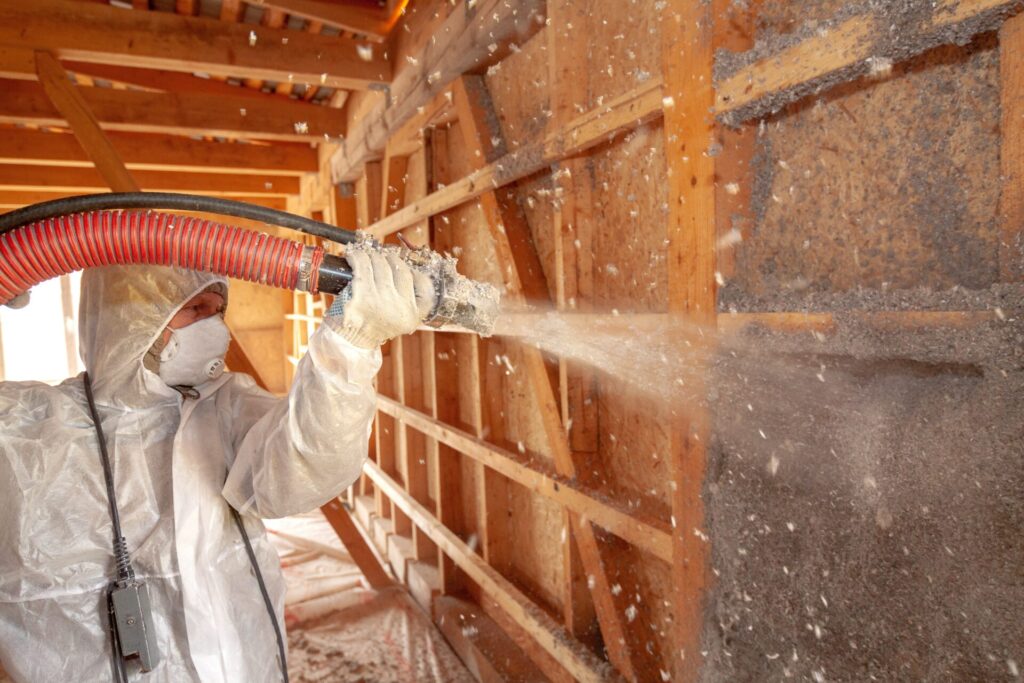
Loose fill cellulose insulation can be blown in for insulation replacement in attics or walls. Dense pack cellulose insulation is also a popular option that does not require a blower. Any installation process for cellulose insulation tends to create dust and debris that will likely blow through the HVAC system to some extent, however the team at WHI will clean up after themselves the best they can.
Installing fiberglass insulation involves placing dense batts into the wall, attic, or floor cavities that need replacement insulation. Fiberglass insulation can also be installed with a blower.
Environmental Impact
It is easy to assume that cellulose insulation is the more environmentally friendly choice since it is made from paper and cardboard. As with most environmental issues, the answer is not so simple. It is true that cellulose insulation is made from paper and often uses recycled materials in its manufacturing. At the same time, to ensure cellulose insulation is fire-rated, it must be treated with chemicals, including boric acid (which is a pest and rodent deterrent) or ammonium sulfate. Fiberglass, on the other hand, is also almost entirely recycled and does not require additional treatment with any chemicals for fire rating. This helps to preserve the health of your home and reduces any negative impact on the environment.
Cost of Materials and Installation
Cost is always a consideration when comparing fiberglass vs. cellulose insulation. However, the cost differential is typically negligible for these two types of insulation. Cellulose and fiberglass are both relatively inexpensive insulation solutions as compared to something like spray foam.

Noise Reduction
Insulation creates a barrier between exterior walls and the outside environment. While the first job of insulation is to prevent heat from passing through, noise reduction is a beneficial side effect of improved insulation. Both fiberglass and cellulose insulation have a similar effect in dampening sound and reducing noise.
Talk to the Experts at Wisconsin Home Improvement
Wisconsin Home Improvement has several decades of experience installing all kinds of insulation. Our qualified team can help determine which insulation solution is right for your home. Whether you decide to choose fiberglass, cellulose, or spray foam, you will have peace of mind knowing that the experts at Wisconsin Home Improvement can install it correctly, ensuring your home stays comfortable year-round.
Contact us to schedule an insulation consultation for your home today.